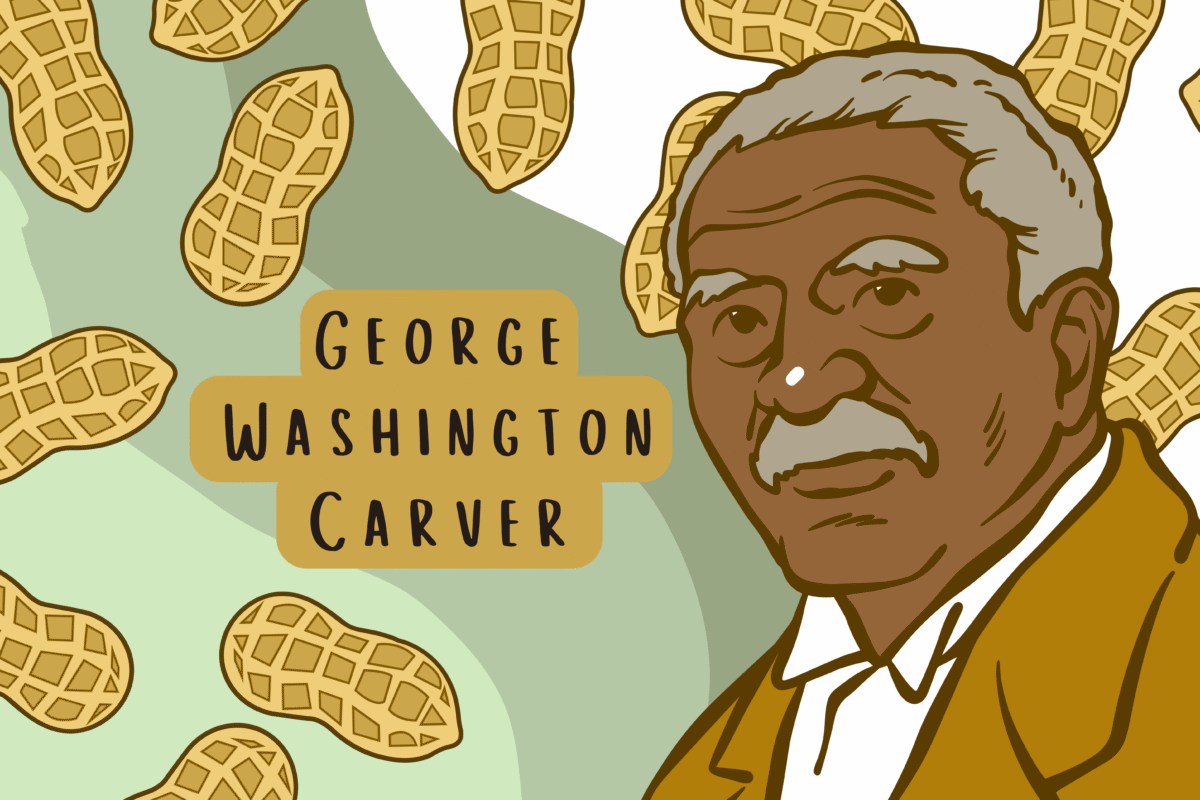
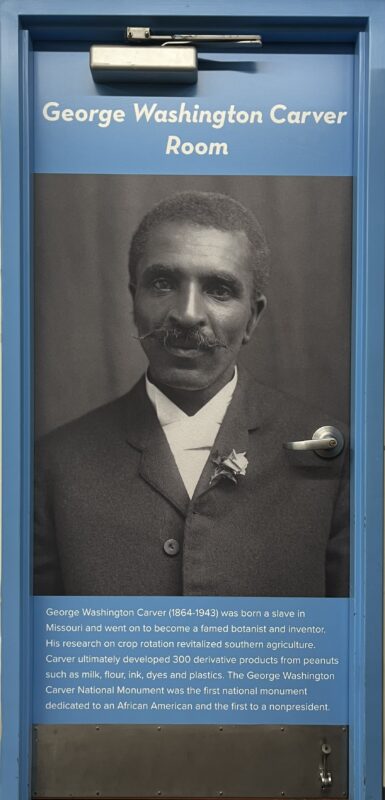
Have you ever been to the Museum of Discovery, and wondered “who is this guy”?
His name sounds familiar, but he doesn’t look like the George Washington from our quarters or one dollar bills. This is George Washington Carver. He was an agricultural chemist; meaning that he used chemistry to find the best possible ways to grow and care for crops.
Born into slavery around 1864 in Diamond Grove, Missouri, Carver was known for having a deep love for farming. It was his passion for learning, and his way with crops that he began being called “The Plant Doctor”. Before the age of 14, Carver had travelled to Kansas for new education opportunities. But this was a time before cars, so the trip took about five days by foot. Years later, he would travel to Iowa for college, another trip by foot that took six days.
Carver applied and got accepted to Highland College in 1885, but his admission was revoked once the college learned that he was black. However, this did not stop Carver from furthering his education. He spent the next five years working and in 1890, he was accepted into Simpson College. Just a year later, Carver switched to Iowa State Agricultural College, better known today as Iowa State University, where he was the first black student to attend. Carver would continue his studies, and would receive a Master of Science degree in 1896.
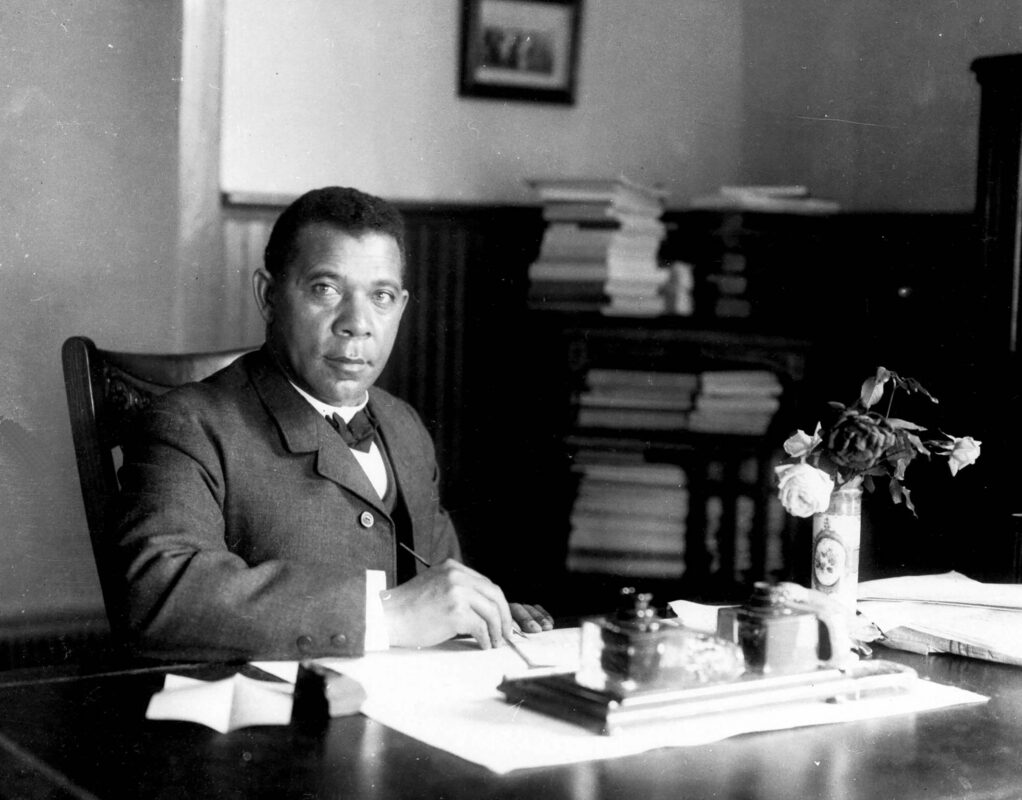
After college, Booker T. Washington asked Caver to be their Director of Agriculture at the Tuskegee Institute. The Tuskegee Institute was established for black students and founded by T. Washington. Carver would work there for the next 47 years. His teachings primarily consisted of proper crop rotations.
While at Tuskegee, he conducted soil tests to determine that cotton, the popular crop of the South, was nutrient-intensive. This meant that cotton took large quantities of essential elements, such as nitrogen, phosphorus, and potassium, from the soil in order to grow. This left behind soil that was lacking in those specific elements. To help soil regain the necessary elements, one needs to plant crops that produce them.
Now introducing the peanut and the sweet potato! These high nitrogen-producing crops changed the agricultural game for farmers. By planting cotton one year and peanuts or sweet potatoes the next, the soil was able to produce the highest quantities of crops. This is called crop-rotation, a process still important for farmers today! Because Caver had helped farmers produce exorbitant amounts of peanuts and sweet potatoes, he began finding new ways to use them rather than just making food out of them.
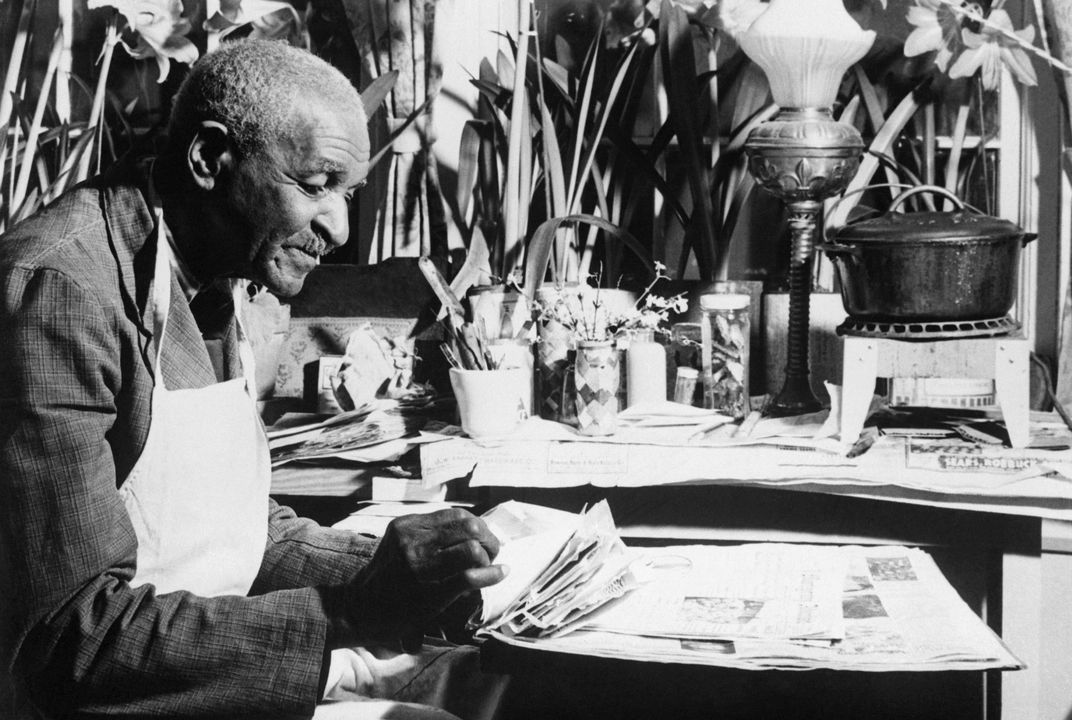
During his lifetime, he created 108 uses for sweet potatoes. He used sweet potatoes to create flour, vinegar, writing ink, and paint. But sweet potatoes is not where Carver got his fame; that came from peanuts, he found 325 uses for peanuts. He learned that peanuts are good for making paper, soap, cooking oil, and even milk! By 1940, peanuts had moved up the ranks to be in the top six leading crops grown in the country. Peanut farming grew so large in the South, it was ranked second, closely behind cotton.
When Carver died in 1943, his birthplace became a national monument. Ten years later, the location was the first federally recognized monument dedicated to a black American.
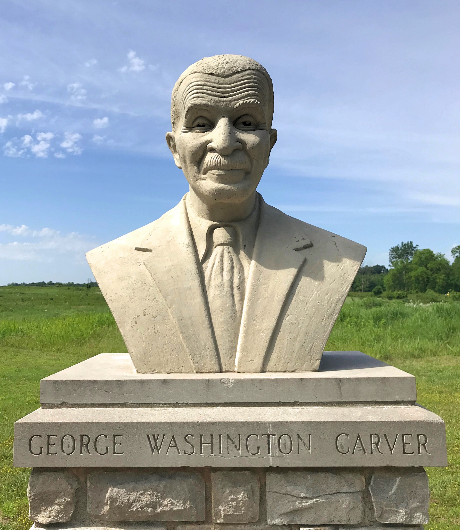
Carver was able to change the agricultural game, through his persistence and hardwork. Not only was he able to generate more crops from cotton through incorporating sweet potatoes and peanuts, this also helped create a better diet for poor farming families.
So the next time you happen to be at the grocery store, take a look at the ingredients list on the back of packages. You might be surprised at how many things have peanuts listed.
Sources